Szukaj na tym blogu

Pokazywanie postów oznaczonych etykietą 20mm. Pokaż wszystkie posty

środa, 29 sierpnia 2018

Pierwsza bitwa pod Kernstown/ First battle of Kernstown

5 sierpnia w naszym Klubie rozegraliśmy pierwszą od 5 lat bitwę z Wojny Secesyjnej. Scenariusz, teren i siły zostały przygotowane tak, by odwzorować starcie pod Kernstown, pierwszą bitwę słynnej kampanii w dolinie Shenandoah generała "Stonewalla" Jacksona. Zapraszam do lektury.

On August 5, in our club, we played the first battle of the American Civil War in 5 years. The scenario, terrain and forces were prepared to recreate the battle of Kernstown, the first battle of general "Stonewall" Jackson's Shenandoah Valley Campaign. Enjoy.


Rankiem 23 marca 1862 roku Jackson wyruszył z Woodstock na północ, w stronę Winchesteru. Raporty otrzymane od dowódcy konfederackiej kawalerii, Turnera Ashbyego, mówiły o nielicznych oddziałach federalnych zajmujących mocną pozycję na Pritchard's Hill, górującym nad drogą do Winchesteru. Według raportów, siły Jacksona miały przewyższać oddziały Unii, dlatego też generał zdecydował się na atak, pomimo że tego dnia przypadała niedziela.

On the morning of March 23, 1862, Jackson set off from Woodstock to the north, towards Winchester. Reports received from Turner Ashby, the commander of the Confederate cavalry, spoke of the few federal troops occupying a strong position at Pritchard's Hill, towering over the road to Winchester. According to reports, Jackson's forces were to outrank Union troops, which is why the general decided to attack, despite the fact that that day was Sunday.


Około godziny 11 drogą na Winchester nadciągnęły z południa pierwsze oddziały Konfederatów. Na czele szła słynna brygada "Stonewall", dawniej dowodzona przez samego Jacksona, która przydomek swój zawdzięczała niezachwianej postawie w pierwszej bitwie pod Manassas.


At about 11 o'clock, the first Confederate troops came from the south. At the head of the column was the famous "Stonewall" brigade, formerly commanded by Jackson himself, who earned its nickname by its unwavering attitude in the first battle of Manassas.


Jackson od razu rzucił swoją starą brygadę do ataku na lewe, odsłonięte, skrzydło Unii. Federalna artyleria prawie natychmiast rozpoczęła ostrzał, czyniąc straszliwe spustoszenie w szeregach rebeliantów. Południowcy odpowiedzieli ogniem ze swoich dział, jednak pozycja na Pitchard's Hill dawała artylerzystom Północy sporą przewagę.


Jackson immediately threw his old brigade to attack the left, exposed, wing of the Union. The Federal artillery started firing almost immediately, making terrible havoc in the rebel ranks. The Southerners responded with fire from their guns, but the position at Pitchard's Hill gave the Northern gunners a huge advantage.


Jankesi przedłużyli swoją linię 2 regimentami, które dotąd trzymali w rezerwie. Dwie baterie skoncentrowały swój ogień na brygadzie "Stonewall", masakrując ją i mieszając jej szyki. Mimo to Konfederaci parli naprzód, pozostawiając za sobą krwawy ślad.

The Yankees extended their line with two regiments that they had kept in reserve. Two batteries focused their fire on the "Stonewall" brigade, massacring and stirring its ranks. Nevertheless, the Confederates pushed forward, leaving a bloody trail behind them.

Jackson zorientował się w międzyczasie, że atak na jankeskie lewe skrzydło był błędem, a jego wierna brygada zostanie najprawdopodobniej zmasakrowana. Stwierdził jednak, że nie wszystko jest jeszcze stracone, a poświęcenie żołnierzy z brygady "Stonewall" nie pójdzie na marne- wykorzysta je by związać siły federalne na Pitchard's Hill, a resztę swoich wojsk przerzuci tymczasem w lewo, na Sandy Ridge.

Jackson realized in the meantime that the attack on the Yankee left wing was a mistake, and his loyal brigade would most likely be massacred. He thought, however, that not everything is lost yet, and the sacrifice of soldiers from the "Stonewall" brigade will not be wasted - he will use them to tie up federal forces at Pitchard's Hill, and the rest of his forces will move left to Sandy Ridge.


 Dowodzący wojskami na Pitchard's Hill generał Kimball też nie próżnował. Widząc poważne siły Konfederatów, których wedle wszelkich raportów w ogóle nie powinno być w dolinie Shenandoah, wysłał gońców zarówno do generała Shieldsa, swojego przełożonego, jak i do dowódców pozostałych brygad, biwakujących w okolicy- Sullivana i Tylera. Sullivan natychmiast poderwał swoją brygadę do wymarszu, tym bardziej, że w jego obozowisku już od jakiegoś czasu słychać było kanonadę. Tyler, początkowo niechętny, też dał się w końcu przekonać i ruszył ze wsparciem.

General Kimball, commanding the forces at Pitchard's Hill, was not idle either. Seeing the serious forces of the Confederates, which according to all reports should not be in the Shenandoah Valley at all, he sent messengers to General Shields, his superior, as well as to the commanders of the remaining brigades, camping in the area - Sullivan and Tyler. Sullivan immediately picked up his brigade for marching, the more so because a cannonade had been heard in his camp for some time. Tyler, initially reluctant, also finally managed to convince and moved with support.


Tymczasem zdziesiątkowana brygada "Stonewall" dotarła w końcu do federalnych pozycji, lecz świadomi swej przewagi Jankesi nie ugięli się i po krótkiej wymianie ognia Południowcy rzucili się do ucieczki.

Meanwhile, the decimated "Stonewall" brigade finally reached the federal positions, but aware of their superiority, the Yankees did not bend and after a brief exchange of fire the Southerners rushed to escape.


Oddziały generałów Burke'a i Fulkersona zajęły w międzyczasie Sandy Ridge. Rozmieszczono artylerię i rozpoczął się silny ostrzał jankeskich pozycji na Pitchard's Hill. Zauważono także zmierzające w stronę pola bitwy federalne posiłki i Jackson zrozumiał, że raporty Ashbyego były nieprecyzyjne i ma przeciwko sobie znacznie większe siły, niż się początkowo spodziewał. Nie dopuszczał jednak do siebie myśli o porażce i odwrocie. Zdecydował, że utrzyma pozycję do zmroku, a nocą wycofa się na południe- osiągnie tym sposobem taktyczny remis i utrzyma wysokie morale wśród swoich żołnierzy.

In the meantime, brigades of generals Burke and Fulkerson have taken over Sandy Ridge. The artillery was deployed and heavy firing of Yankee positions at Pitchard's Hill began. Federal forces were also heading for the battlefield, and Jackson realized that Ashby's reports were inaccurate and enemy had much more strength than he had expected. However, he did not allow himself to think about failure and retreat. He decided to keep the position until dusk, and at night he would retreat to the south - he would achieve a tactical draw and maintain high morale among his soldiers.


Oddziały Sullivana nadciągnęły tymczasem na prawe skrzydło Kimballa i zajęły północny kraniec Sandy Ridge, przygotowując się do natarcia. Za nimi chmura kurzu zwiastowała zbliżanie się brygady Tylera. Po obu stronach artylerzyści uwijali się przy działach, zasypując przeciwników gradem śmiercionośnego ołowiu.


Meanwhile Sullivan's troops arrived on the right wing of Kimball and took the northern edge of Sandy Ridge, preparing for the advance. Behind them a cloud of dust heralded the approach of Tyler's brigade. On both sides, the gunners were working their way around the cannons, filling up opponents with a hail of lethal lead.


Przez około 2 godziny obie armie umacniały pozycje i szykowały się do walnej rozprawy. Jedynie artyleria prowadziła śmiertelny pojedynek. Mimo lepszych dział, unioniści ponosili duże straty od ognia Konfederatów, którzy zajmowali dużo lepsze pozycje na Sandy Ridge.


For about two hours, both armies strengthened their positions and prepared themselves for a general dissertation. Only artillery led a deadly duel. In spite of better guns, the Unionists suffered heavy losses from the Confederate fire, which held much better positions on Sandy Ridge.


W końcu, około godziny 3 po południu, generał Sullivan stanął na skraju lasu, ostatni raz zlustrował oddalone o około kilometr pozycje Konfederatów za kamiennym murem i wydał rozkaz do natarcia. Za jego ludźmi maszerowali żołnierze Tylera. Kimball ze swojej pozycji na Pitchard;s Hill ubezpieczał skrzydło natarcia.


Finally, about 3:00 PM, General Sullivan stood on the edge of the forest, for the last time he examined the positions of the Confederates, about half a mile away, behind a stone wall, and gave an order to attack. Behind him, Tyler's soldiers marched. Kimball from his position at Pitchard; s Hill insured the flank of the assault.


Jankesi zeszli w przełęcz i zaczęli wspinać się pod górę, w stronę rebelianckich pozycji. Kartacze i kule z muszkietów czyniły potężne wyrwy w ich szeregach, lecz mimo to parli naprzód, niczym fala przypływu. Generał Sullivan został ranny na samym początku natarcia, dowództwo po nim przejął pułkownik Pond z 62. Regimentu Ohio, lecz i on padł w pobliżu kamiennego muru.


The Yankees descended into the pass and began to climb up the hill towards rebel positions. The grapeshot and the musket balls were making huge breaks in their ranks, but nevertheless they were pushing forward, like a tidal wave. General Sullivan was wounded at the very beginning of the attack, and Colonel Pond of the 62nd Ohio Regiment seized command of him, but he also fell near the stone wall.


Walka była zażarta. Kilkukrotnie żołnierze Unii podrywali się do natarcia, lecz huraganowy ogień Konfederatów z brygady Burksa osadzał ich w miejscu. Za każdym razem jednak posuwali się coraz bliżej.


The fight was fierce. Several times Union soldiers rushed to attack, but the hurricane fire of the Confederates from the Burks' brigade put them in place. Each time, however, they moved closer and closer.


W końcu na swoim prawym skrzydle Federalni dopadli linii Południowców. Po zażartej walce, rebelianci zaczęli ustępować.
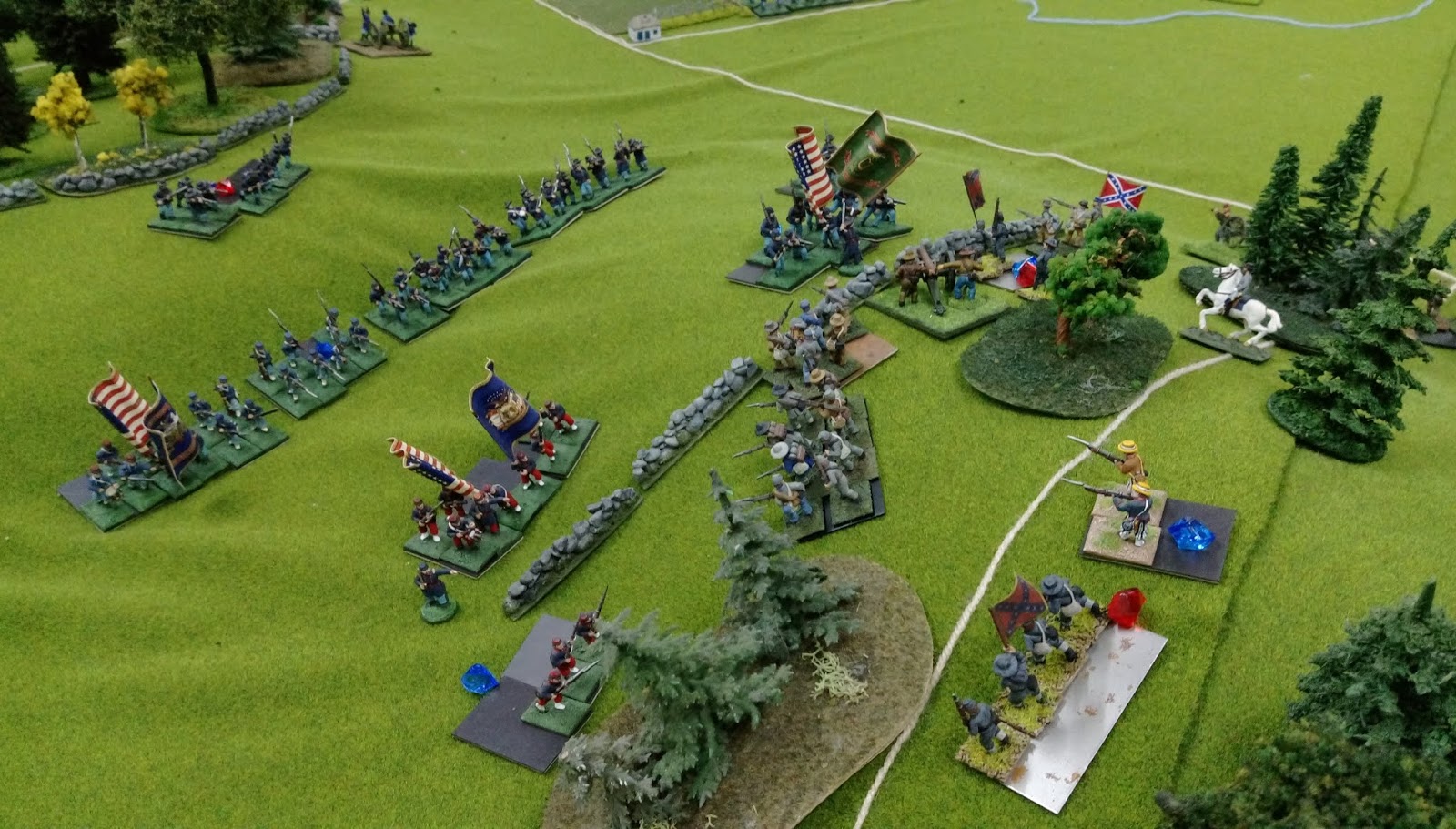

Finally, on their right wing, the Federals reached the line of the Southerners. After a fierce battle, the rebels began to give way.


Zachęceni sukcesem, Jankesi raz jeszcze przypuścili natarcie na całej linii. Generał Tyler na czele 110. Regimentu z Pensylwanii dopadł kamiennego muru i rozstawionej za nim baterii. Wywiązała się zażarta walka, w ruch poszły bagnety, kolby i stemple, lecz wkrótce Konfederaci rzucili się do ucieczki.

Encouraged by success, the Yankees have once again assaulted the entire line. General Tyler at the head of the 110th Pennsylvania Regiment caught the stone wall and the battery placed behind it. A fierce fight broke out, bayonets, flasks and stamps went into motion, but soon the Confederates rushed to escape.


Widząc, jak jego linie pękają, generał "Stonewall" Jackson nakazał generalny odwrót. Gęste lasy oraz względnie świeża, niewielka brygada Fulkersona osłoniły wycofanie się Konfederatów na południe.

Seeing his lines break, General "Stonewall" Jackson ordered a general retreat. Thick forests and a relatively fresh, small Fulkerson's brigade shielded the Confederate's withdrawal to the south.


Przebieg bitwy był podobny do historycznego starcia, wynik końcowy też. Różnicę stanowiły straty- w naszym wypadku niemal dwukrotnie większe, niż w rzeczywistości, chociaż natężenie walk i czas całego starcia były podobne. Większość strat zadała artyleria, co wynika z naszych przepisów, a nie miało miejsca podczas prawdziwej bitwy, gdzie ilość ofiar ostrzału artyleryjskiego była stosunkowo niewielka. Zapewne przemyślimy i w jakimś stopniu zmodernizujemy ten aspekt naszych przepisów.

The course of the battle was similar to the historic event, the end result too. The difference were the losses - in our case, almost twice as much as in reality, although the intensity of the fighting and the duration of the entire battle were similar. Most of the losses were caused by artillery, which results from our rules, and it did not happen during a real battle, where the number of victims of artillery fire was relatively small. We will probably think about it and modernize this aspect of our rules to some extent.

środa, 14 sierpnia 2013

Północ kontra Południe/ North vs. South

W sobotę w klubie rozegraliśmy fikcyjną bitwę z okresu amerykańskiej wojny secesyjnej. Ja oraz Luciu stanęliśmy po stronie Konfederacji, a Adam i Alek- Unii. Adam opracował sprytny system generowania sił przed bitwą, dzięki czemu nikt nie wiedział do końca, czego się spodziewać po przeciwniku. Wytyczne, jakie dostaliśmy przed bitwą mówiły, że mamy zająć i utrzymać kluczowe skrzyżowanie oraz osłonić koncentrację armii. Dysponowaliśmy tylko czterema, niezbyt licznymi, brygadami, za to większość naszych wojsk stanowili weterani. Jako rozpoznanie służył pułk kawalerii, a dodatkowe wsparcie zapewniały 4 niewielkie baterie artylerii (2 gładkolufowe, 2 gwintowane). Informacje o nieprzyjacielu mówiły, że będzie zapewne dysponował niewielką przewagą liczebną, zarówno w piechocie, jak i artylerii. Jako że scenariusz osadzony był w roku 1862 mogliśmy mieć pewność, że będziemy przewyższać Jankesów klasą naszych żołnierzy. W toku bitwy okazało się, że przewaga Jankesów jest o wiele większa, niż zakładaliśmy. Popełniono też kilka istotnych błędów, które przesądziły o wyniku bitwy, lecz o tym wszystkim później ;)
Zapraszam do lektury :)

Last Saturday, at the club we played fictional battle of the American Civil War period. Luciu and I stood on the side of the Confederacy, and Adam and Alek took roles of Union commanders. Adam has developed a clever system for generating forces before the battle, so that no one knew until the end of what to expect from the enemy. The guidelines, which were given before the battle, said that we have to take and hold important crossroads and cover the concentration of the army. We had only four, not very numerous brigades, but most of our troops were veterans. Cavalry regiment served as a recognition and four small batteries of artillery provide additional support (two smoothbore, two rifled). Information about the enemy said that they would probably had a slight advantage in numbers, both in the infantry and artillery. As the scenario was set in 1862 we could be confident that we will exceed the Yankees with the class of our troops. In the course of the battle, it turned out that the advantage of the Yankees is much larger than we expected. There were also some wrong decisions that determined the outcome of the battle, but about all of this later ;)


Pole bitwy:

Field of battle:

Krótko po godzinie 7.00 na polu bitwy pojawiła się kawaleria Południa i zajęła skrzyżowanie, by osłonić rozwinięcie się brygady Fielda na grzbiecie, między lasem a sadem. Koło 7.40 na drodze biegnącej na wschód pojawiła się kawaleria federalna...

Shortly after 7.00 am cavalry of the South came on the battlefield and took the crossroads to protect the Field's Brigade taking position on the ridge, between the forest and orchard. About 7.40 on the road running east federal cavalry appeared...

Pierwszy kontakt/ First contact

Widząc gotowych do walki Konfederatów federalni wycofali się do lasu na południe od drogi. Koło 8.00 na horyzoncie pojawiła się kolumna Jankeskiej piechoty, która rozwinęła się obok lasu i obserwowała silne pozycje Konfederatów na szczycie grzbietu. Była to brygada gen. Pratta.

Seeing ready to fight Confederates the federal cavalry withdrew into the woods south of the road. Around 8.00 am appeared on the horizon Yankee infantry column, which took up a position next to the woods and watched the strong Confederates position at the top of the ridge. It was Pratt's brigade.

Jankesi czekają na wsparcie/The Yankees are waiting for support


Konfederacka kawaleria/ Confederate cavalry

Obie strony stały bezczynnie przez prawie półtorej godziny. W tym czasie żołnierze przygotowali posiłki, a dowódcy radzili. Konfederaci przez moment zastanawiali się, czy nie zaatakować Jankesów, lecz żal im było opuszczać dobrą pozycję. Około godziny 9.00 gen. Field wydał swoim żołnierzom rozkaz okopania się na szczycie grzbietu. Brak aktywności Południowców był po myśli dowództwa Unii, które czekało w tym czasie na kolejne brygady i opracowywało plan ataku. 

Both sides have become idle for nearly hour and a half. At that time, the soldiers prepared meals, and the commander advised. The Confederates briefly wondered whether they should attack the Yankees, but they did not want to leave a good position. Around 9:00 am, General Field gave orders to his troops to fortify at the top of the ridge. No activity of was beneficial for the the Southerners headquarters of the Union, which at that time was waiting for the next brigades and work out a plan of attack.


Brygada gen. Fielda/ Field's brigade

Brygada gen. Gregga/ Gregg's brigade

Sad-centrum pozycji Konfederatów/ The Orchard- center of Confederate battleline

Sytuacja ok. godz. 9.00/ Situation at 9 am.


Pozycje Konfederatów wydają się być bardzo silne/Confederate positions seem to be very strong

Tuż po 9.00 na skraju lasu na prawym skrzydle piechoty Pratta pojawiły się pierwsze federalne armaty i rozpoczęły morderczy ostrzał brygady gen. Fielda na szczycie wzniesienia. Odsłonięta piechota rebeliantów ponosiła tak ciężkie straty od ognia artyleryjskiego, że w końcu porzuciła budowanie umocnień i wycofała się na przeciwstok, by się przegrupować.

Shortly after 9.00 am on the edge of the woods on the right flank of Pratt's infantry appeared the first federal guns and started a murderous firing of  Field's brigade on the top of the hill. Exposed rebel infantry suffered such heavy casualties from artillery fire that finally abandoned building fortifications and retreated to the counter slope to regroup.

 Artyleria Unii/ Union artillery

Kolejne brygady federalnej piechoty docierają na pole bitwy/ Another federal infantry brigades arrive on the battlefield


Celny ostrzał Jankeskich dział zmusił do odwrotu w pierwszej kolejności artylerię Południa/ Accurate fire of Yankee guns in the first place forced to retreat artillery of the South


Okopy zostały ukończone jedynie w sadzie i skryta za nimi piechota umknęła uwadze artylerzystów Unii/ The trenches were completed only in the orchard and infantry behind them  gone unnoticed by the Union gunners


Już pierwsze strzały przerzedziły szeregi Konfederatów/ The very first shots thinned the ranks of the Confederates


Pół godziny później.../ Half an hour later...


Brygada Fielda cofa się na drugą linię/ Field's brigade withdraws to the second line

W międzyczasie na krańcu lewego skrzydła padły pierwsze strzały karabinowe. To kawaleria obu stron  rozpoczęła zmagania. Jankesi, pomimo lepszego uzbrojenia (karabiny odtylcowe) nie byli w stanie wyprzeć rebeliantów z dobrej pozycji za płotem i ponieśli ciężkie straty, które zmusiły ich do ucieczki.

In the meantime, on the far left flank first rifle shots were fired. It was cavalry of both sides that began their struggle. The Yankees, despite better weapons (breech-loading carbines) were unable to dislodge the rebels from a good position behind a fence and suffered heavy losses, which forced them to flee.

Konfederacka kawaleria świetnie się spisywała podczas całej bitwy/ Confederate cavalry fought well that day


Przed godziną 10 z lasu wyłoniła się długa linia żołnierzy w błękitnych mundurach. To dywizja gen. Johna Newtona ruszała do ataku na pozycje Konfederatów na szczycie grzbietu. Natarcie prowadziły brygady Rowleya i Cochrane, za nimi podążali weterani Devensa. Widząc to Południowcy podprowadzili pod szczyt liczną brygadę gen. Lane z Karoliny Północnej.W drugim rzucie stanęła, ściągnięta z północnego skrzydła, brygada Thomasa. Ludzie Fielda stanęli w rezerwie za sadem.

Before 10 am of the woods came out a long line of soldiers in blue uniforms. It was division of General John Newton, which began to attack the Confederate positions at the top of the ridge. The attack was lead by brigades, Rowley's and Cochrane's followed them veterans Devens. Seeing this, the Southerners led large brigade of General Lane from North Carolina the top of the ridge. In the second line stood Thomas' brigade repositioned from the northern flank. Field's Men stood in reserve behind the orchard.

They're coming on the same old style...

Rebelianci przygotowują się do odparcia szturmu/The rebels are preparing to repel the assault

Odwody zajmują wyznaczone pozycje/ Reinforcements occupy designated positions

Brygada Rowleya/ Rowley's brigade

Cohrane atakuje polanę między dwoma lasami/ Cochrane attacks glade between two forests

Generał Newton osobiście dowodzi natarciem/ General Newton personally leads assault

Druga linia Konfederatów gotowa do akcji/ Confederate's second line ready for action

Widząc podchodzących Jankesów gen. Lane chciał początkowo rzucić swoją brygadę do szaleńczej szarży na bagnety w dół stoku, licząc że impet natarcia zmiesza dywizję unii i zmusi ją do zatrzymania, lecz powstrzymał go gen. Hill. Nawet gdyby udało się rozgromić Jankesów na tym odcinku, Południowcy znaleźli by się pod morderczym ostrzałem federalnej artylerii. Postanowiono więc wycofać się na przeciwstok, pociągając za sobą piechotę Unii, i tam kontratakować. Oddziały Rebeliantów zaczęły się więc powoli cofać, cały czas prowadząc ogień do nacierających Jankesów. Duże spustoszenie w ich szeregach czyniła artyleria rozstawiona w sadzie oraz strzelcy wyborowi ostrzeliwujący flankę brygady Rowleya. Prowadząc swoich żołnierzy do natarcia na szczyt, gen Rowley zachwiał się i padł, rażony kulą snajpera. Jego brygada kontynuowała atak, lecz brak dowództwa wkrótce dał o sobie znać...

Seeing the approaching Yankees General Lane initially wanted to throw his brigade to desperate charge with bayonets down the slope, hoping that the momentum of attack shake union division, and force it to stop, but General Hill stopped him. Even if they managed to crush the Yankees in this section, Southerners would be under the murderous fire of the Federal artillery. It was therefore decided to withdraw to the counter slope, entailing Union infantry, and there counterattack. Rebel troops began to retreat So slowly,all the time shooting at the advancing Yankees . large havoc in their ranks did Artillery deployed in the orchard and marksmen shooting at the flank of the brigade Rowley's. Leading his troops to the attack on the top, General Rowley stumbled and fell, struck by a sniper's bullet. His brigade continued to attack, but the lack of leadership soon made ​​itself known ...


Konfederaci oczekują Jankesów na przeciwstoku/ The Confederates awaiting Yankees on the counter slope

Generał Rowley padł/ General Rowley has fallen

Jankesi się zbliżają/The Yankees are coming

Po wejściu na szczyt Jankesów powitała celna salwa Konfederatów. Praktycznie cały szereg brygady Rowleya padł skoszony. Pozbawieni dowódcy Unioniści rzucili się do ucieczki, jedynie dwa pułki żuawów utrzymały swoje pozycje i dzielnie prowadziły nierówną walkę, ponosząc ciężkie straty.

After entering on the top Yankees welcomed Confederate volley accurate. A whole line of brigade Rowley's fell . Without their commander, Unionists fled. Only two regiments of Zouaves maintained their positions and bravely fought an unequal battle, suffering heavy losses.

Ognia!/ Fire!

Odwrót!/ Retreat!

Po pierwszej salwie Konfederaci, wyjąc niczym furie, rzucili się na Jankesów. Żuawi z brygady Rowleya oraz brygada Cochrane stawiła im jednak silny opór, celną salwą powstrzymując większość szarżujących pułków. Kilka nawet rzuciło się do ucieczki. Do walki doszło na samym krańcu linii, gdzie 37. pułk z Karoliny Północnej zwarł się ze 122. pułkiem z Nowego Jorku. Pozostawieni przez towarzyszy, Nowojorczycy bronili się dzielnie, lecz zostali rozgromieni przez oszalałych rebeliantów. Dalej na północy, w wyrwę powstałą w brygadzie Rowleya, wdarł się 38. pułk Karoliny Północnej, złożony w całości z niedoświadczonych rekrutów. Nie widząc wroga naprzeciwko, niesieni zapałem żołnierze 38. pułku zwrócili się w lewo i natarli na skrzydło brygady Cochrane, rozbijając ją i zmuszając do chaotycznego odwrotu.

After the first volley, The Confederates, howling like a furies, rushed to the Yankees. Zouaves from Rowley's brigade and the entire Cochrane's brigade  however resisted, stopping most of charging regiments by accurate volley and forced few to retreat. The fight took place at the end of the line between 37th North Carolina regiment and 122nd New York regiment. Left by the companions, New Yorkers defended bravely, but were routed by the crazed rebels. Further north, in a hole formed in the Rowley's brigade, broke the 38th North Carolina regiment composed entirely of inexperienced recruits. Not seeing the enemy in front, carried by enthusiasm, the soldiers of the 38th regiment turned left and advanced against flank of Cochrane's brigade, breaking it and forcing the chaotic retreat.

Wycie rebeliantów rozbrzmiało nad polem bitwy/Rebel yell sounded upon the battlefield

Zwycięstwo 37. pułku z Karoliny Północnej/ Victory of 37th North Carolina regiment

Brygada Cochrane zostaje rozbita atakiem od flanki/ Cochrane's brigade is broken by the attack from the flank

Weterani z brygady Devensa ruszają, by opanować sytuację/ Veterans from Devens' brigade move to resolve the situation

Dowódcy Unii/ Union Commanders


Pomimo sukcesu lewe skrzydło Konfederatów wygląda bardzo słabo/ Despite the success the Confederate left wing looks very weak

Na całej linii Jankesi przystąpili do ofensywy. Na północy rekruci z brygady Vintona wiązali oddziały Gregga, w centrum, do ataku na sad, ruszyli żołnierze Pratta i Whitinga, a na południowym odcinku inicjatywę przejął Devens, rozbijając resztki brygady Lane i prowadząc natarcie na Thomasa. Pozbawieni rezerw Południowcy mogli liczyć tylko na to, że uda im się odeprzeć szarżę federalnych i ustabilizować sytuację, wykrwawiając Jankesów na tyle, by stracili dalsze możliwości ataku. 

The entire line of The Yankees began the offensive. In the north of the recruits from Vinton's brigade engaged Gregg's troops, in the center, the soldiers of Pratt and Whiting rushed to attack the orchard, and on southern sector Devens took the initiative, smashing the remnants Lane's brigade and leading the attack on Thomas. Without reserves Southerners could only count that they will be able to repel the charge of federal and stabilize the situation, bleeding the Yankees enough to lose further possibilities of attack.

37. i 38. pułki z Karoliny Północnej zostają zniszczone przez nacierających Jankesów/ 37th and 38th regiments of North Carolina are destroyed by the advancing Yankees


Walka ogniowa przed finałowym natarciem/ Shooting before the final assault


Nadzieje Konfederatów się nie spełniły. Północ rozpoczęła od wyparcia Południowców z sadu i podciągnięcia swojej artylerii bliżej, by skuteczniej razić brygadę Gregga. Mimo wszystko artyleria Południa zadawała ciężkie straty atakującym. Szybko się też okazało, że rekruci Vintona nie mogą się równać z zaprawionymi w boju żołnierzami Gregga, było już jednak za późno, by to wykorzystać. Natarcie Devensa na lewą flankę Konfederatów zakończyło się pełnym sukcesem i groziło odcięciem drogi odwrotu, więc gen. Hill wydał rozkaz wycofania się wszystkim siłom. Osłonę zapewniła w miarę świeża brygada Gregga. Pomimo spektakularnego sukcesu Jankesi nie rzucili się w pościg. Straty poniesione przez nich w tej bitwie były na tyle wysokie, by zrezygnowali z dalszego gnębienia Rebeliantów i zadowolili się zajęciem ich pozycji.

Confederate hopes have not been fulfilled. North started from repel Southerners from the orchard and pull up their artillery closer to effectively strike Gregg's brigade. Still, Southern Artillery caused heavy casualties on attackers. It turned out quickly that Vinton's recruits can not compare with seasoned soldiers from Gregg's brigade, but it was too late to take advantage of it. Devens' assault on the Confederate left flank was a full success, and threatened to cut off the line of retreat, so General Hill gave the order to withdraw all forces. Gregg's fresh brigade protected the retreat. Despite the spectacular success of the Yankees, they did not rushed in pursuit. The losses suffered by them in this battle were high enough to discourage them from further oppress the Rebels.


Brygada Whitinga szturmuje sad/ Whiting's brigade assaults the orchard


Artyleria Unii na nowej pozycji/ Union artillery on a new position


Ciężka walka w sadzie/ Heavy fight in the orchard


Cienka szara linia/ Thin grey line


Generał Newton trafiony przez zbłąkaną kulę/ General Newton hit by a stray bullet


Jankesi napierają na Konfederatów/ The Yankees, are pressing on the Confederates


35. pułk z Georgii, po ciężkiej walce, uległ 7. pułkowi z Massachusetts/ 35th Georgia Regiment, after a hard fight, was beaten by the 7th Massachusetts Regiment 


Natarcie brygad Whitinga i Devensa zmiotło centrum i skrzydło Konfederatów/ The assault of Whiting's and Devens' brigades swept center and the flank of the Confederates


Konfederacka kawaleria walczyła dzielnie do samego końca/ Confederate cavalry fought bravely to the very end


Opór na lewym skrzydle Południa jest już tylko symboliczny/ Resistance on the left flank of the South is just symbolic


Federalne sztandary powiewają nad zdobytymi szańcami Konfederatów/ Federal flags wave over the captured Confederate ramparts


Jankesi świętują zwycięstwo/ The Yankees celebrate victory


Sytuacja na koniec bitwy, około godz. 13.00 The situation at the end of the battle, about 1 pm.

Podsumowując, bitwa zakończyła się pełnym zwycięstwem Unii. Straty po obu stronach były podobne- padło, zaginęło, zostało rannych lub dostało się do niewoli około 3200 Unionistów i 3600 Konfederatów. Biorąc jednak pod uwagę siły początkowe ( prawie 9000 federalnych przeciwko około 6500 południowców) Rebelianci odczuli je o wiele mocniej. Największym błędem Południa było bezczynne czekanie przez pierwsze 2 godziny bitwy. Gdybyśmy zdecydowali się na atak, mieliśmy szansę rozbijać brygady Unii po kolei, w miarę jak wchodziły na pole bitwy. Przyjmując taktykę defensywną oddaliśmy inicjatywę w ręce dowódców Unii i słono za to zapłaciliśmy. To jednak nie koniec. Południe jeszcze powstanie!

In conclusion, the battle was a complete victory for the Union. Losses on both sides were similar-about 3200 Unionists and 3600 Confederates were killed, missing, wounded or taken prisoner. However, given the initial forces (almost 9000 federal against about 6,500 southerners) rebels felt it a lot harder. The biggest mistake of the South was idle waiting for the first two hours of the battle. If we decide to attack, we had a chance to break the Union brigades one after another, as they entered the battlefield. By adopting defensive tactics we put the initiative into the hands of the Union commanders and we paid for it dearly. But this is not the end. South will rise again!